If you’re about to start a mobile food business, you probably spend hours scrolling through price tags and trailer photos. But here’s a truth we’ve learned after 17 years of building custom
food trailers at ETODEVICE: the size of your trailer will make or break your profits way faster than the price tag.
Pick too small, and you’ll turn away customers during peak hours because you can’t keep up with orders. Pick too big, and you’ll waste money on space you never use — plus you’ll get locked out of half the best spots because they have strict length limits. We’ve seen new operators lose $3,000 to $15,000 just from choosing the wrong size. That’s money you could put into ingredients, marketing, or your first big event.
This guide breaks down the three most popular sizes: 10ft, 13ft, and 16ft. We’ll cover what each can handle, who they work best for, and how to match one to your business plan. By the end, you’ll know exactly which size fits your goals, no guesswork needed.
Why Food Trailer Size Matters More Than You Think
A lot of first-time buyers ask “how much does it cost?” before anything else. But the right question is “how many orders can I make in a day?”
Your trailer size sets your revenue ceiling. It decides how much equipment you can fit, how many people can work inside, and how fast you can serve customers. A cheap 10ft trailer sounds like a good deal until you hit a busy Saturday market and watch half your line leave because the wait is too long.
On the flip side, a giant 20ft trailer sounds impressive until you find out 60% of local spots won’t let you park there. You’ll pay more for the trailer, more for gas to tow it, and more for insurance — all for space you don’t actually need.
The sweet spot? Pick a size that fits your current menu and leaves a little room to grow. That’s how you set yourself up to make money without wasting cash.
Breaking Down the Most Popular Food Trailer Sizes
10ft Food Trailer: The Compact Entry-Level Choice
The 10ft trailer is the smallest, most affordable way to get into the mobile food business. It’s built for people who want to test an idea without dropping a ton of money upfront.
- Best for: Solo operators, total beginners, farmers markets, small pop-ups, and tight urban spots
- Staff capacity: 1 to 2 people (it gets tight with 2)
- Daily order volume: 50 to 80 orders comfortably
- What fits inside: A small fryer, a single griddle, an under-counter fridge, and basic prep space. It works perfectly for coffee, hot dogs, simple tacos, ice cream, or pre-packaged snacks.
The biggest win with a 10ft trailer is flexibility. You can tow it with a regular SUV or half-ton pickup. It fits in tiny parking lots and street spots that larger trailers can’t touch. It’s also cheap to insure and easy to set up — most people can be ready to serve in 15 or 20 minutes.
The downside is obvious: you run out of space fast. If your menu has more than 3 items, you’ll feel cramped. You can’t take on big festival crowds or catering jobs. Many owners who start with a 10ft end up upgrading within 8 to 12 months once their business picks up.

13ft Food Trailer: The Overlooked Middle Ground
Most people jump straight from 10ft to 16ft, but the 13ft trailer is the hidden sweet spot for small teams. It adds 3 feet of usable workspace without the big price jump of a 16ft model.
- Best for: Two-person teams, growing beginners, light catering, and medium-size markets
- Staff capacity: 2 to 3 people
- Daily order volume: 80 to 120 orders comfortably
- What fits inside: A full griddle, a small fryer, a dedicated prep table, and extra storage. You can serve burgers, sandwiches, expanded taco menus, or multi-item dessert concepts.
The 13ft hits a nice balance. You get a real prep area so you don’t bump elbows during rushes, but you still keep most of the maneuverability of a smaller trailer. Most small venue spots still let you park, and you don’t need a super heavy truck to tow it.
It’s not for everyone, though. You still can’t fit large specialty equipment like a full BBQ smoker or a pizza oven. Big festivals with 5,000+ people will still overwhelm you. But if you want more room than a 10ft and don’t need the full capacity of a 16ft, it’s a smart pick.
16ft Food Trailer: The Sweet Spot for Most Serious Operators
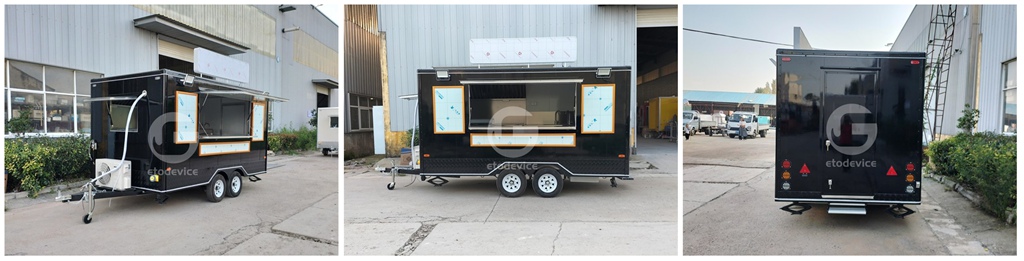
At ETODEVICE, we recommend the 16ft trailer to about 70% of our customers. It hits the perfect balance of space, flexibility, and earning power. It’s the size that works for almost any concept, almost anywhere.
- Best for: Full menu concepts, food festivals, corporate catering, and brands that plan to grow
- Staff capacity: 2 to 3 people comfortably
- Daily order volume: 150 to 200+ orders
- What fits inside: A full cook line, double fryers, a refrigerated prep table, vertical fridges, and plenty of dry storage. You can run almost any concept: tacos, burgers, pizza, BBQ basics, bubble tea — you name it.
The biggest advantage of a 16ft trailer is access. Most event venues and city spots have an 18ft length limit. That means a 16ft trailer gets you into almost every location, while a 20ft or larger gets turned away. It also holds its value really well if you ever decide to upgrade.
It does cost more — usually around $10,000 more than a basic 10ft. You also need a full-size pickup to tow it safely. But for most people who take this business seriously, the extra orders you can handle pay for the difference fast. We’ve seen customers go from 80 orders a day to 180 orders a day right after upgrading to 16ft.

What About Larger Sizes (20ft and up)?
If you run an established catering company or a high-volume BBQ business, a 20ft or 23ft trailer makes sense. They hold 3 to 5 staff, fit giant smokers or full kitchen setups, and can crank out 300+ orders a day.
But for most new operators, they’re overkill. You pay a lot more upfront, you need a heavy-duty tow truck, and you lose access to half the good spots. Start smaller and size up once you have consistent big-event work.

3 Simple Questions to Pick Your Perfect Size
You don’t need a fancy business plan to narrow it down. Just answer these three questions honestly:
1. How many items are on your menu?
- 1 to 3 items: Go with a 10ft trailer
- 4 to 6 items: Go with a 13ft trailer
- 7+ items or a full kitchen concept: Go with a 16ft trailer or larger
2. How many people will work inside with you?
- Just you or one part-time helper: 10ft works fine
- 2 people working full shifts: 13ft or 16ft
- 3 or more people regularly: 16ft minimum
3. Where will you sell most of the time?
- Farmers markets, street spots, small local pop-ups: 10ft to 13ft
- Food festivals, local catering, mid-size events: 16ft
- Large festivals, corporate contracts, full catering services: 20ft+
Other Important Factors Before You Buy
Your Tow Vehicle
Don’t fall in love with a trailer before you check if your truck can pull it.
- 10ft to 13ft trailers: Most half-ton pickups or large SUVs work fine
- 16ft trailers: You’ll want a full-size pickup like an F-150 or equivalent
- 20ft and up: You need a heavy-duty truck like an F-250 or bigger
Add the cost of a tow vehicle to your total budget if you don’t already have one. It’s a common hidden cost that catches new owners off guard.
Local Venue Rules
Every city and every event has different rules. Some farmers markets only allow 14ft or smaller trailers. Some downtown spots have a 16ft limit. Before you buy, call 3 or 4 places you plan to work most often and ask about their size restrictions. This one check can save you from a huge mistake.
Your Growth Plans
We see this mistake all the time: people buy a trailer that fits exactly what they need today, then 6 months later they want to add 2 new menu items and hire a helper — and they have no room.
If you’re just testing a business idea, starting small is fine. But if you know you want to grow, go one size up from what you need right now. It’s cheaper to have a little extra space than it is to sell your trailer and buy a new one a year later.
How ETODEVICE Helps You Build the Right Food Trailer
At ETODEVICE, we’ve built over 3,500 custom food trailers for customers in 100+ countries over the past 17 years. We don’t just sell you a standard box on wheels — we help you pick the right size and layout for your exact business.
Here’s what you get when you work with us:
- Sizes for every need: We build everything from 7ft mini carts up to 30ft mobile kitchens. Our lineup includes 10ft, 13ft, and 16ft models in round, square, and classic airstream styles, so you can match the look and size to your brand.
- Free custom layout design: Tell us your menu and the equipment you need, and our designers will map out a full interior plan for you — no extra charge. We make sure every inch of space works for your workflow, so you don’t waste money on unused corners.
- Built to last, built to comply: All our trailers go through strict quality checks before they leave our factory. We use durable materials, proper ventilation, and safe plumbing and electrical systems. We’ve helped customers get their trailers approved in the US, Europe, Australia, and beyond.
- End-to-end support: From your first quote to shipping and after-sales help, our team is here 24/7. We even share guidance on import paperwork and local regulations so you don’t get stuck at customs.
If you’re still not sure which size is right for you, head to our website at
https://www.etofoodcarts.com/ to browse our
project gallery and request a free, no-obligation quote. We’ll walk you through every step.
Final Thoughts
Choosing a food trailer isn’t about buying the cheapest one you can afford. It’s about buying the right one for the business you want to build.
A 10ft trailer in a great spot with a tight menu can make solid money. A 20ft trailer with no plan and no good locations will sit unused. But when you match the right size to your menu, your team, and your events? That’s where real profit lives.
Start small if you’re testing an idea. Go with 16ft if you’re serious about growing. When in doubt, pick the size that gives you a little room to expand — extra space always beats running out of room mid-rush.
At ETODEVICE, we’re here to help you get it right the first time. Reach out today, and let’s build the food trailer that grows with your business.